Winter’s nearly done, and the change of season is the best cue you’ll get all year to walk around the house and pick up what’s been quietly going wrong. None of what follows needs a renovation or a big budget — just an hour with a checklist (or a call to your local Hire A Hubby) before spring weather and warmer temperatures make small problems bigger.

Quick answer: what should I check at the end of winter?
The essentials are gutters and downpipes, roof and flashing, deck and timber sealing, weather seals around doors and windows, bathroom and kitchen silicone, and a check for storm or damp damage that built up over winter. Most of these are 15–30 minute jobs, and catching them now is far cheaper than fixing water damage or a broken system later. Anything involving plumbing (taps, hot water systems) or electrical work (heating, cooling, wiring) should always be checked or repaired by a licensed plumber or electrician.
Outdoor jobs to do before spring
Why should I clean my gutters and downpipes now?
Winter storms and dropping autumn leaves mean gutters are usually at their fullest by late August. Blocked gutters overflow, and overflow runs straight down external walls or into eaves — which is where a lot of hidden damp and timber rot starts. Clearing them now, before spring rain and storm season, is one of the cheapest bits of prevention you can do.

Should I inspect my roof after winter?
Yes. High winds and heavy rain can lift or crack tiles, loosen ridge capping, and damage flashing around vents and chimneys without it being obvious from the ground. A quick roof check (or a professional one, if it’s steep or you’re not comfortable up there) before spring storms catches leaks while they’re still a five-minute fix.
Does my deck or timber need attention this time of year?
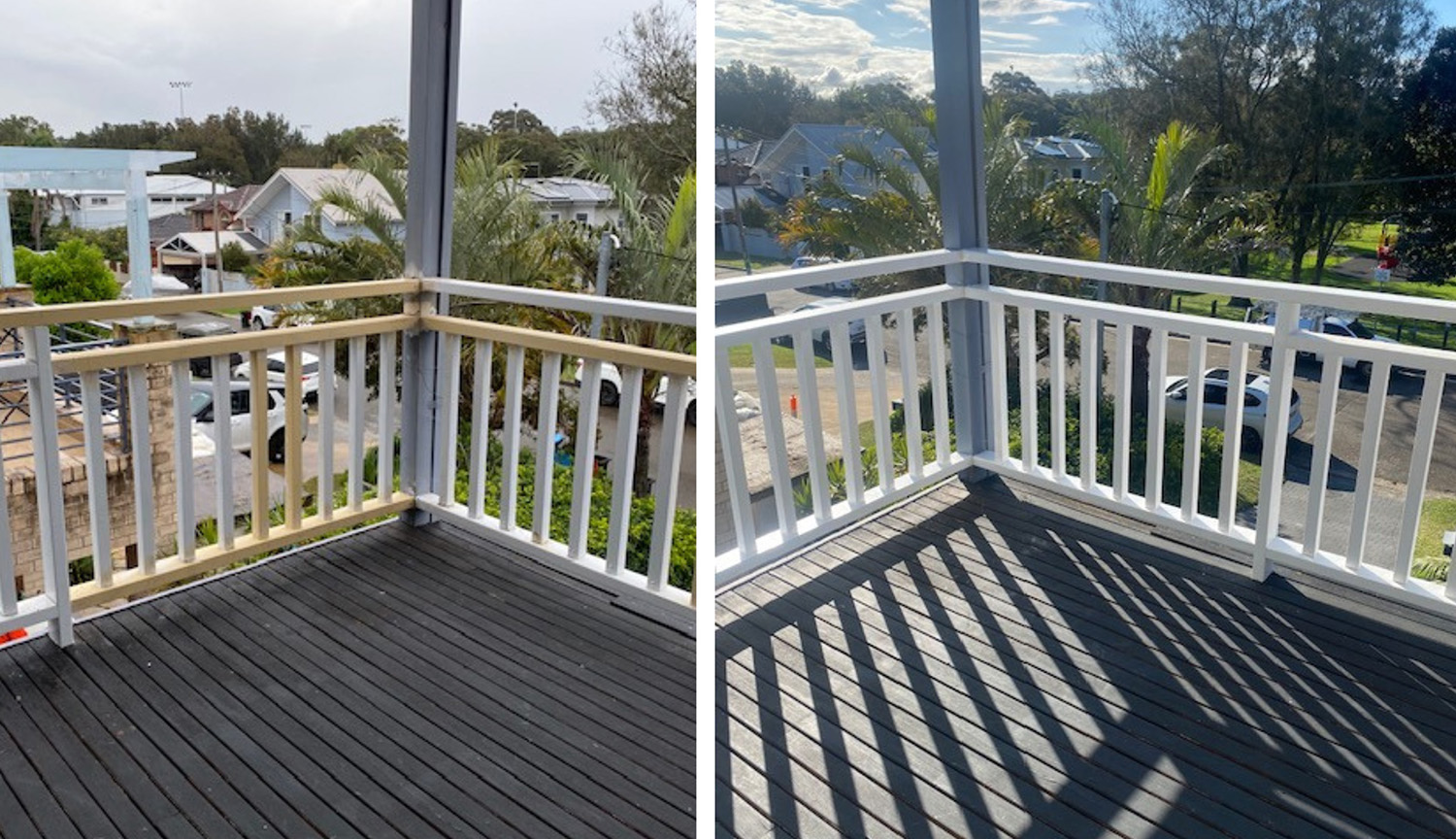
Timber decking, fences, and pergolas take a beating over winter — moisture gets into any bare or worn patches and starts the rot process. Late August, before the weather warms up and dries out, is a good window to check for soft spots, re-tighten loose boards, and plan a re-oil or reseal for early spring once temperatures lift.
What outdoor jobs get missed most often?
- External taps and hose fittings — a visual check for cracks or leaks is easy to do yourself; if you spot a leak or crack, it’s a job for a licensed plumber
- Fences and gates — look for storm damage, rust on hinges, and sagging posts
- Flyscreens — repair now, before insects become an issue in spring
- Sensor and outdoor lighting — test globes and sensors while it’s still dark
- Driveways and paths — check for winter cracking and early weed growth
- Outdoor furniture and BBQs — clean and check before you start using them again
👉 Call 1800 803 339 or click here to get a quote.
Indoor jobs to do before spring
How do I check for winter damp or mould?
Look in bathrooms, along window frames, and in any room with poor airflow — winter condensation is the biggest cause of mould growth in Australian homes. Wipe down affected areas, check that extraction fans are working properly, and look for any silicone or grout that’s gone black or started to lift, as this is where moisture gets behind the surface.

What should I do with air conditioning and ceiling fans before summer?
Split system filters can usually be slid out and cleaned yourself — check your manufacturer’s instructions, and do this now rather than in the first heatwave when everyone’s trying to book a service. A full air conditioner service or any repair work is electrical, so that needs a licensed electrician or air conditioning technician. Ceiling fans are an easy DIY win in the meantime — check the direction setting and give the blades a clean, which makes a real difference to comfort and energy use once the weather turns.
What indoor jobs are commonly overlooked?
- Door and window seals — check for gaps letting in draughts and, come summer, cool air
- Squeaky hinges and sticking doors — often worse after a cold, damp winter
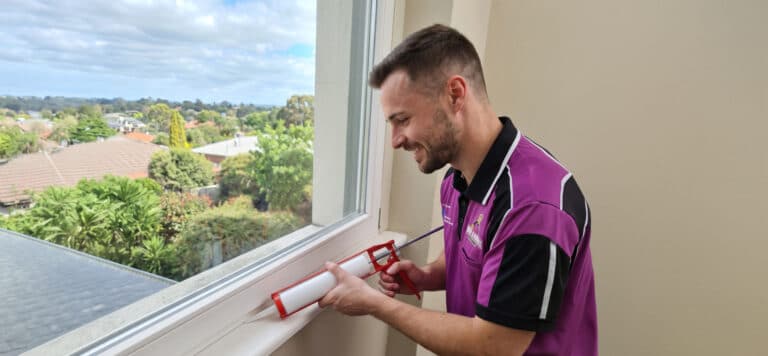
- Grout and silicone in wet areas — re-caulk anywhere showing gaps or mould
- Cupboard doors and drawer runners — a five-minute adjustment fixes most sticking
- Hot water system — a visual check for leaking or rust around the unit is fine to do yourself; any repair or servicing needs a licensed plumber
👉 Call 1800 803 339 or click here to get a quote.
Frequently asked questions
Do I need to do all of this before spring, or can it wait?
Most of it can wait a few weeks, but gutters, roof checks, and anything involving water (taps, silicone, hot water systems) are worth doing before spring rain arrives, since water damage gets more expensive the longer it sits.
What’s the difference between end-of-winter maintenance and getting a home ready to sell?
End-of-winter maintenance is about protecting the home you live in from damage as the seasons turn. Getting a home market-ready involves a different checklist, focused on presentation and buyer appeal — we cover that in a separate guide.
Can I do these jobs myself?
Plenty of them — gutter clearing, checking seals, cleaning filters, ceiling fans — are manageable DIY jobs if you’re comfortable and safely equipped. Roof work, timber repairs, and deck resealing are best left to a professional, and anything involving plumbing (taps, hot water systems) or electrical work (heating, cooling, wiring) must be done by a licensed plumber or electrician — that’s not something Hire A Hubby carries out, and we’ll always point you to the right licensed trade for those jobs.
How much does end-of-winter maintenance usually cost?
Because none of these are renovation-scale jobs, most can be handled in a single visit for the cost of a few hours’ labour, subject to materials required and specifics of the job.
Get it sorted before spring. If your list is longer than your Sunday, your local Hire A Hubby can work through it in one visit — gutters, decks, silicone, seals, and everything in between. No job too small.
Need a hand? Hire A Hubby can help.
👉 Call 1800 803 339 or click here to get a quote.